What is it?
Lead aprons, lead glass, lead doors and room-protection elements should be matched to application, required specification, fit and installation context.
Radiation protection
Lead aprons, lead glass, lead doors and room-protection elements should be matched to application, required specification, fit and installation context.
Discuss this requirement ↗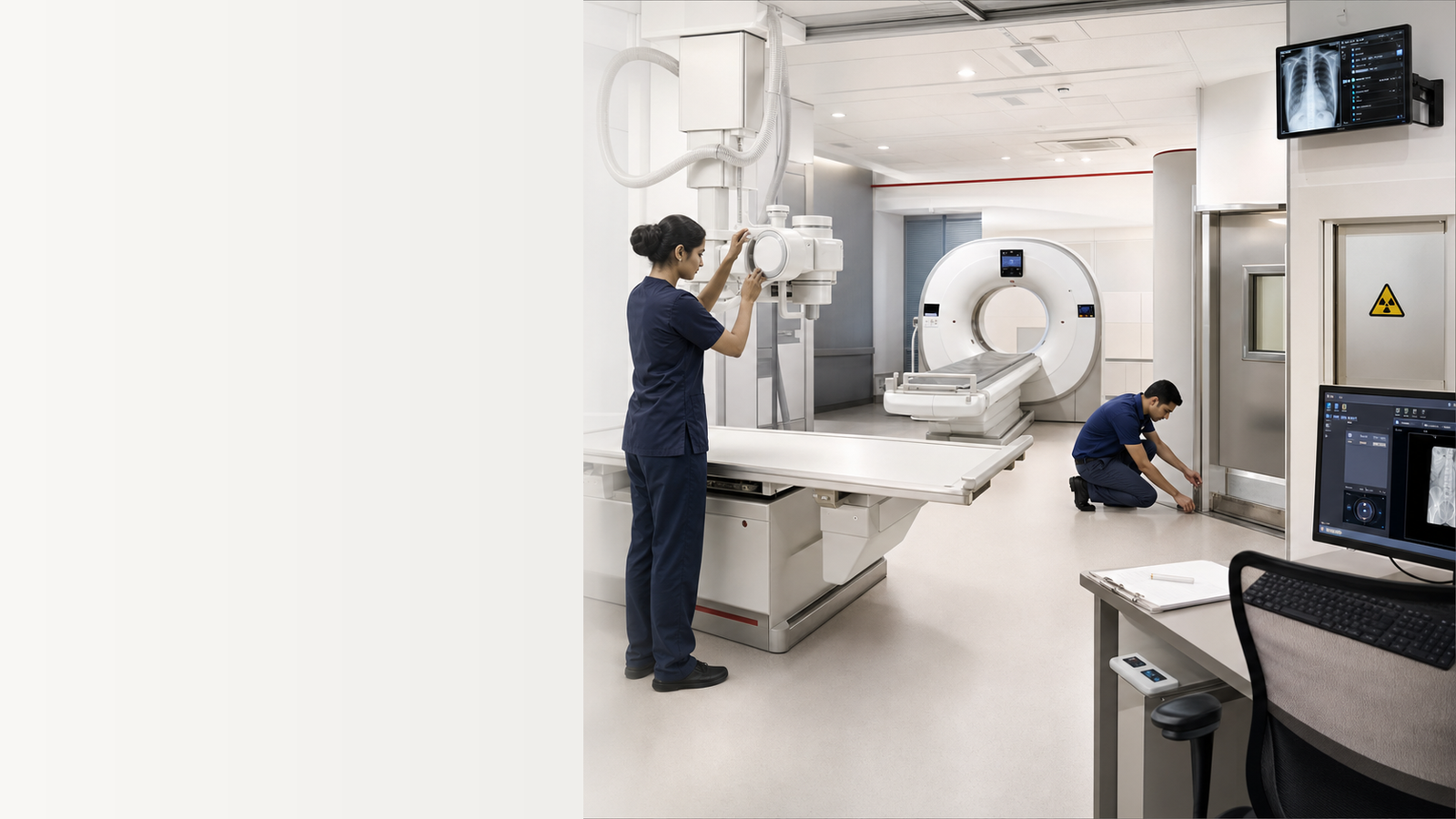
Typical discussion topics
Need help choosing? Share the existing equipment, intended work, location and timing. We will help identify what must be compared before a recommendation.
Product decision guide
These are orientation notes, not a substitute for a system-specific proposal. Availability, configuration, authority, warranty and execution scope are confirmed case by case.
Lead aprons, lead glass, lead doors and room-protection elements should be matched to application, required specification, fit and installation context.
X-ray, CT, mammography and interventional environments requiring personal or structural protection.
During room planning, compliance review, equipment replacement or PPE renewal.
New lead aprons, lead glass, lead doors and room elements are specified to the approved requirement.
Modality, workload, drawings, dimensions and the approved protection design must be available.
Supply-only and fitted-work responsibilities, civil interfaces and acceptance are separated.
Fit, workmanship and product coverage follow the quoted scope; statutory approval remains with the responsible authority.
Questions we begin with
This is confirmed after the intended clinical use and present environment are documented, because it directly changes the suitable configuration.
Expected workload and the existing workflow are reviewed before options are compared or a commercial scope is proposed.
Room, equipment and interface information are checked before installation ownership and site responsibilities are agreed.
Warranty, service access and response commitments are stated only in the product-specific proposal.
A useful first conversation
Your message opens with a short discovery checklist: organisation, location, product, pathway, timeline, existing equipment, site readiness and preferred call time.